Lindgren participates in NC State-Tuscarora Nation meeting
Posting date:
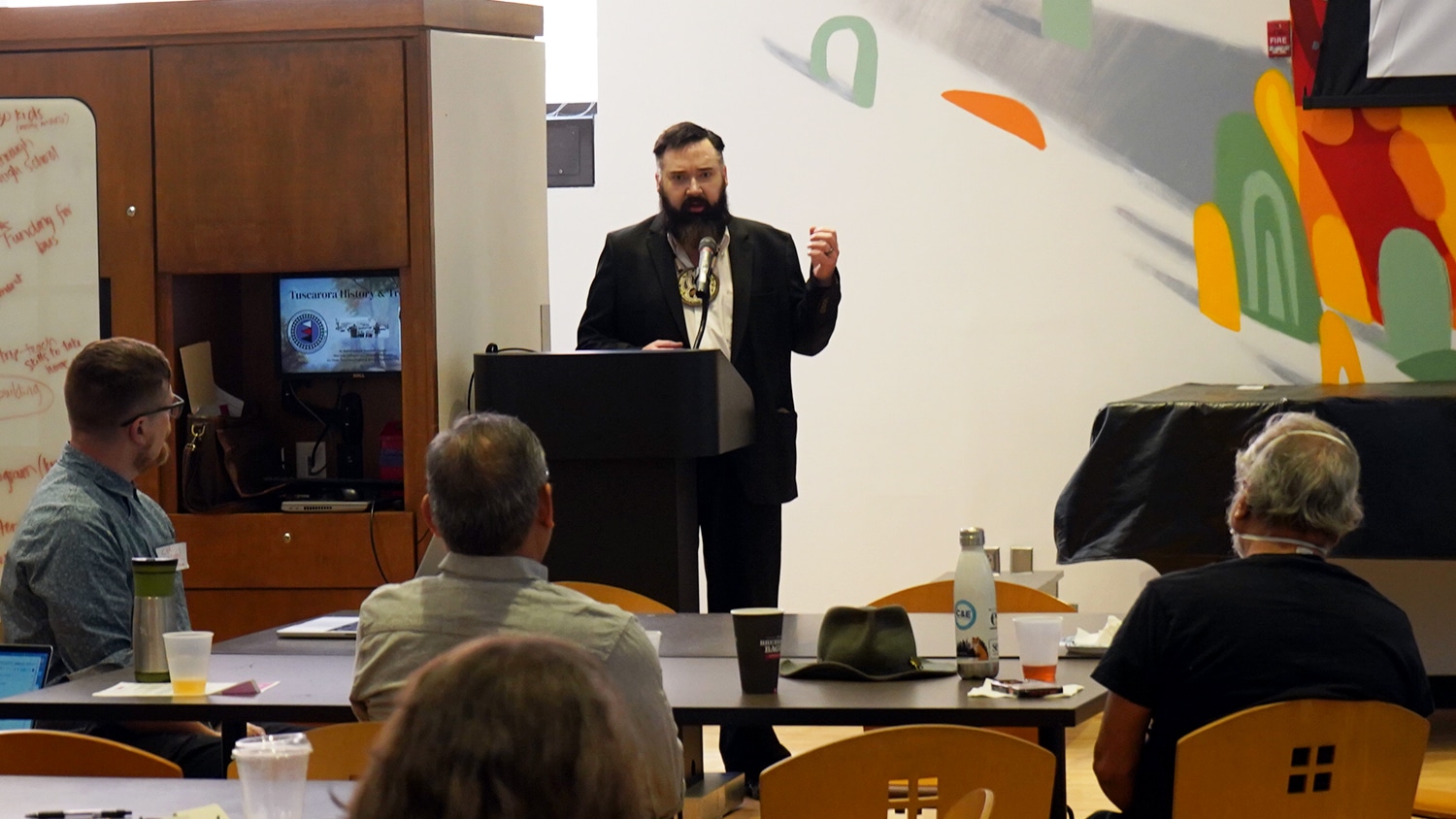
(Photo credit: Rachelle-Garbarine)
On Saturday, May 16th 2026 Chris met with numerous leaders and community members of the Tuscarora Nation and learn more about their histories and goals. The one-day conference was organized by his colleague in Anthropology, John Millhauser, so representatives of the Tuscarora Nation of North Carolina (TNNC) could forge new relationships and locate shared initiatives with university faculty, students, and administrators.
Chris learned how Tuscarora itself means “Hemp Gatherers”, and it embodies how their ancestors gathered and wove hemp fibers into rope, nets, etc. They are also well known creators of hemp cloth and clothing! Chris was also grateful to learn more about how the Tuscarora originally lived on the lands that start from the Roanoke River and across the region over to the Cape Fear River in North Carolina.
Tuscarora representative Runęhkwáʔčhęʔ Duane Brayboy (pictured above) noted many concerns of that mirror those of whom REMA currently aims to resolve in the NANA region. He noted that the Iroquoian peoples’ knowledge and history of the region, including cultural practices, languages, and a sustainable relationships with its lands require great effort to remember and preserve. He also noted how their perspectives hold potential to help resolve the current environmental challenges that we all must address together.
Tuscarora representative Rahnà·wakę·w Donnie McDowell shared his work and goals at the Tuscarora Nation of North Carolina and the Tuscarora Historical & Preservation Society. There he shares many intitiatives with Aqqaluk Trust’s role in the NANA region, with emphases on language revitalization and land stewardship. He hopes that NCS State relationships can help advance their self-determined and restorative work.
Chris was able to share an overview of REMA’s work since 2021, and he summarized the aims of our IMLS-funded “Mystery in the Archives” workshop that our team would soon thereafter conduct.
Chris learned that there are many overlapping concerns and aims between the Inupiaq in the NANA region and the TNNC community members. He’s hopeful that some potential coalitional work may collectively benefit both Native communities.